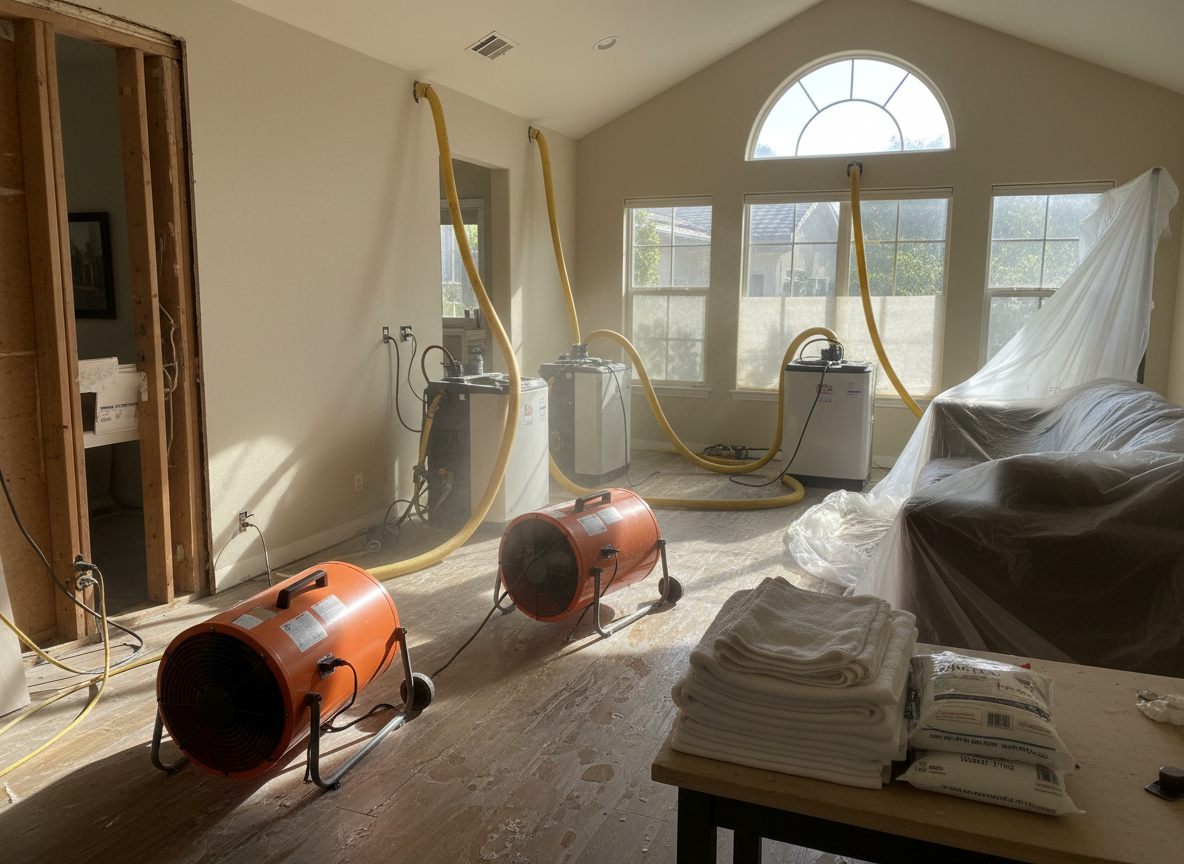
Structural drying begins with an independent local contractor assessing moisture levels throughout the affected building envelope using meters and thermal imaging. In San Diego's mild coastal Mediterranean climate, water can linger in older stucco and plaster homes common in North Park and La Jolla without obvious surface signs. The contractor isolates wet materials, sets up dehumidifiers and air movers to create balanced airflow, and monitors daily readings to prevent mold growth in cavities behind walls or under floors. Edge cases include multi-story properties in Mission Valley where water migrates downward through concrete slabs, requiring targeted drying of subflooring. Homeowners should avoid running household fans alone, as this can spread spores rather than extract moisture.
Materials and equipment include commercial-grade desiccant or refrigerant dehumidifiers, high-velocity air movers, and moisture barriers to protect unaffected areas. Contractors working in Pacific Beach or Downtown San Diego often encounter mixed construction from the 1950s onward, where lath-and-plaster walls absorb and release water differently than modern drywall. Warnings include the risk of hidden saturation in Balboa Park-adjacent neighborhoods where older foundations meet shifting soils; incomplete drying here can lead to recurring issues months later. The independent contractor removes or isolates saturated insulation and baseboards only when necessary and coordinates disposal with local waste rules.
Monitoring and Verification
Daily moisture logs track progress until readings match unaffected reference points in the same structure. Final verification uses both pin and pinless meters plus thermal scans to confirm no residual dampness remains in framing or subfloors near La Jolla Cove or Coronado properties.
Technician insight
In San Diego, the thing that catches most people out with Structural Drying Services is how the mild coastal Mediterranean climate keeps humidity high enough that older plaster walls in North Park homes never fully dry on their own. Homeowners often stop too soon when surfaces feel dry but cavities behind remain damp, especially near older foundations.
Structural Drying Services Services We Offer
✓Moisture Mapping and Detection
An independent local contractor uses meters and imaging to locate hidden water in walls and floors throughout San Diego County homes before drying begins.
✓Industrial Dehumidification Setup
Contractors place commercial dehumidifiers sized for the space to pull moisture from air and materials in properties across La Jolla and Mission Valley.
✓Air Circulation and Mover Placement
Strategic positioning of air movers creates directed airflow that speeds evaporation from structural cavities without spreading contaminants in North Park homes.
✓Post-Drying Moisture Verification
Final meter readings and thermal scans confirm drying targets are met before an independent contractor clears equipment from the site.
✓Affected Material Isolation
Contractors remove or protect saturated baseboards and insulation to allow proper drying of remaining structural elements in older San Diego housing stock.
How it works
- 1
Site Assessment
An independent local contractor inspects the property, identifies moisture extent, and notes construction details typical of the neighborhood.
- 2
Equipment Deployment
Dehumidifiers and air movers are positioned based on mapping results to address wet zones in walls, floors, and ceilings.
- 3
Daily Monitoring
Readings are taken each day and equipment is adjusted until moisture levels stabilize across all affected structural components.
- 4
Final Clearance
Verification testing confirms the structure is dry before equipment removal and site walkthrough with the homeowner.
Pricing
pricing depends on the job and is discussed with the contractor after you call