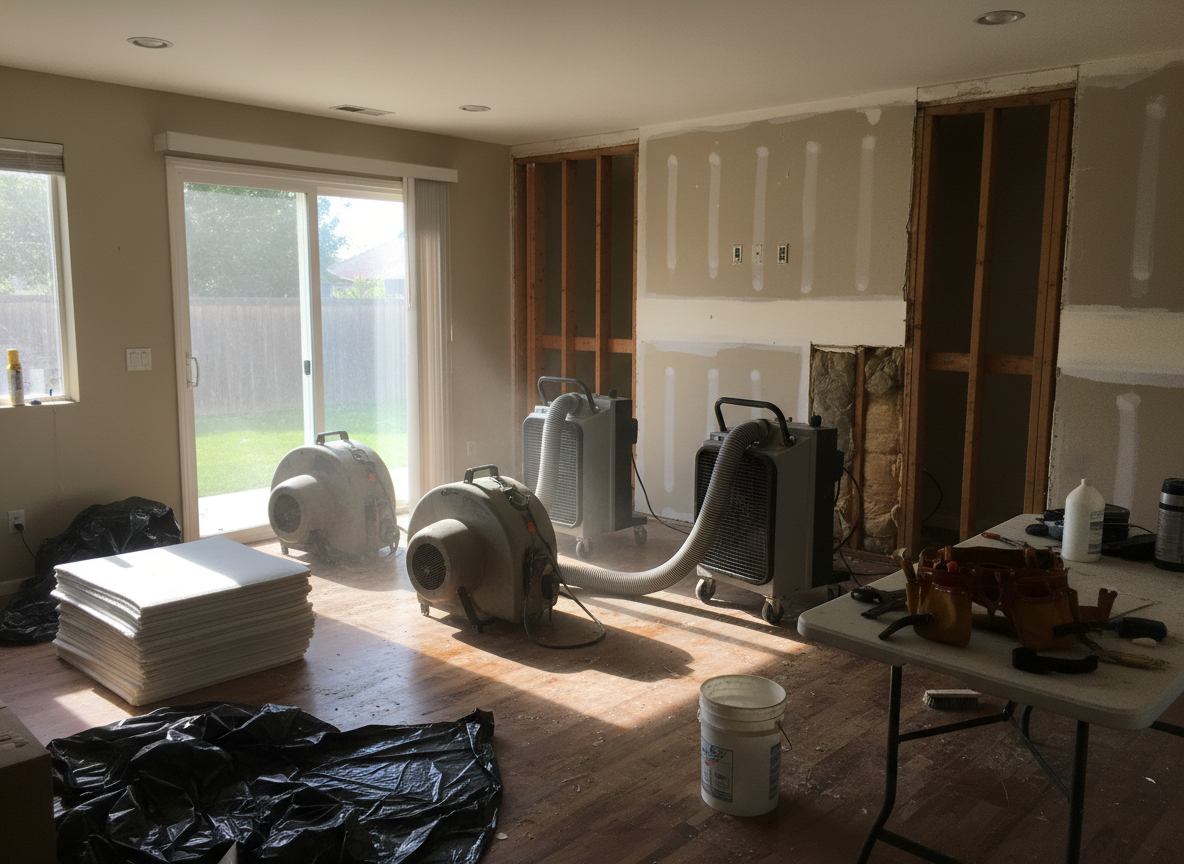
Flood damage restoration begins with an independent local contractor assessing the affected structure to identify all water intrusion points. In San Diego's mild coastal Mediterranean climate, even modest rainfall can pool against older stucco homes in neighborhoods such as North Park or Mission Valley, allowing moisture to migrate into wall cavities and subfloors without obvious surface signs. The contractor maps moisture levels using meters and thermal imaging before removing standing water through targeted extraction methods suited to the property's layout.
Once extraction is complete, the contractor focuses on drying and dehumidification to prevent secondary issues like mold growth in porous materials common to local housing stock. Edge cases include hidden saturation in multi-story homes near Balboa Park where water travels through shared walls or along concrete slabs in Pacific Beach properties built close to the water table. Homeowners are warned that delaying professional drying after any flood event often leads to more extensive repairs later.
Materials and methods vary by the source of the water and the age of the building. Contractors working in La Jolla or Coronado frequently encounter tile and hardwood installations that require specialized drying techniques to avoid warping or delamination. An independent local contractor will document conditions and recommend only the work needed rather than broad replacement.
After drying, the contractor handles cleaning, sanitizing, and minor reconstruction such as removing and replacing saturated drywall or insulation. This staged approach keeps the scope focused on the actual damage while protecting unaffected areas of the home.
Technician insight
In San Diego, the thing that catches most people out with Flood Damage Restoration is how our mild coastal Mediterranean climate lets moisture linger inside older stucco walls in North Park and La Mesa long after the rain stops. Homeowners often stop at visible puddles and miss the water that has wicked up behind baseboards or under tile, especially in homes built before modern moisture barriers became standard.
Flood Damage Restoration Services We Offer
✓Emergency Water Extraction
An independent local contractor removes standing water from flooded rooms to limit further absorption into floors and walls.
✓Structural Drying Services
Contractors set up air movers and dehumidifiers to pull moisture from framing, drywall, and subfloors in San Diego homes.
✓Basement Flood Cleanup
Lower-level spaces in older North Park and Mission Valley properties receive targeted pumping and moisture mapping after heavy rain.
✓Carpet and Flooring Restoration
Saturated carpets and hardwood are assessed and either dried in place or removed to prevent buckling in coastal humidity.
✓Sewage Backup Cleanup
When floodwater mixes with contaminants, contractors follow containment and disinfection steps required for safe reentry.
How it works
- 1
Initial Assessment
An independent local contractor inspects the property, identifies water sources, and documents moisture levels in affected areas.
- 2
Water Removal
Standing water is extracted using pumps and vacuums suited to the volume and location of the flood.
- 3
Drying and Monitoring
Equipment dries the structure while the contractor checks progress with moisture meters until readings return to normal.
- 4
Restoration Work
Damaged materials are removed and replaced as needed to return the home to its pre-flood condition.
Pricing
pricing depends on the job and is discussed with the contractor after you call