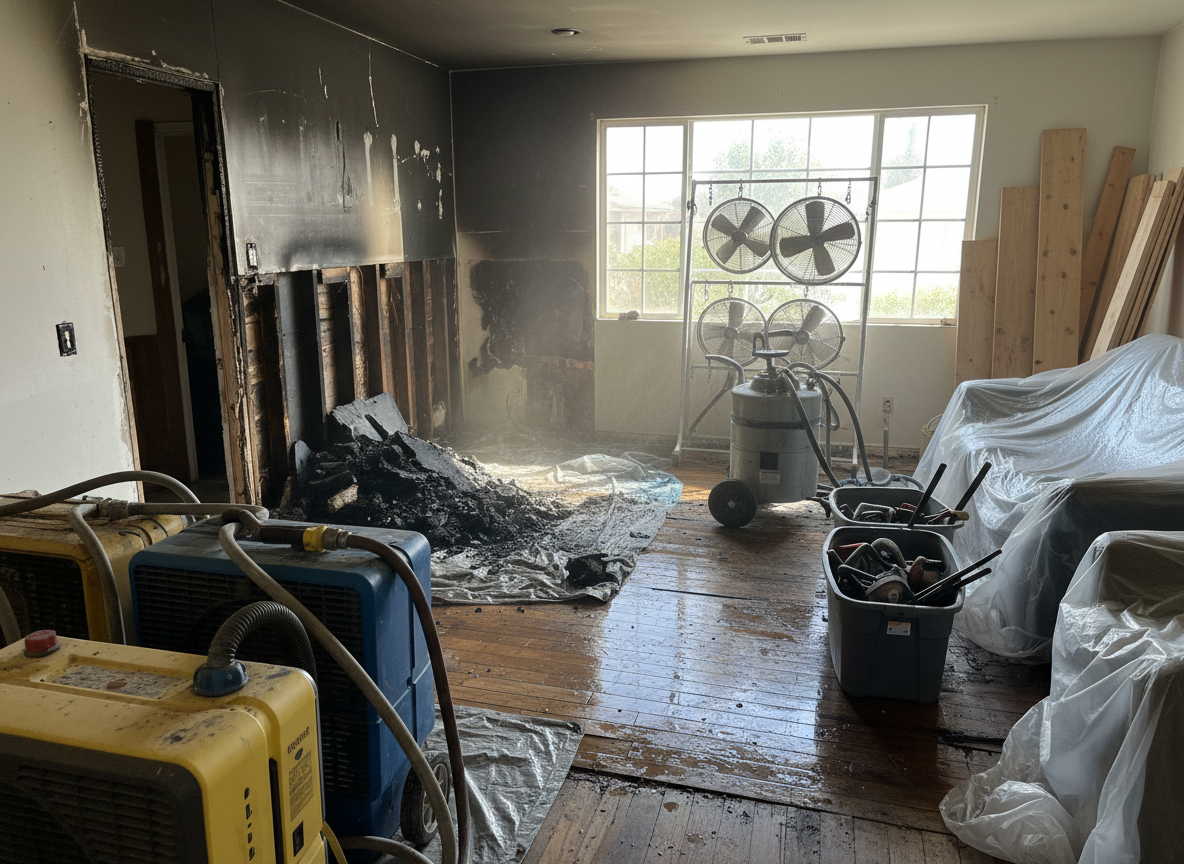
Fire and water damage restoration begins with an independent local contractor evaluating the affected structure for both combustion residues and water introduced by suppression efforts. In San Diego County homes built before the 1980s in neighborhoods such as North Park and Mission Valley, older plaster and lathe walls can trap moisture behind surfaces, requiring targeted demolition to prevent hidden mold growth. Contractors use moisture meters and thermal imaging to locate water that has migrated into subfloors or attic spaces common in the region’s mild coastal Mediterranean climate.
Materials and equipment include industrial air movers, dehumidifiers, and HEPA-filtered air scrubbers to address soot and particulates that settle on porous surfaces like carpet and drywall. Edge cases arise near landmarks such as Balboa Park where historic construction limits aggressive removal methods, forcing contractors to employ gentler cleaning protocols. Homeowners should avoid disturbing charred materials until the contractor completes documentation, as this can complicate insurance claims for properties in La Jolla or Pacific Beach.
Warnings include the risk of electrical hazards in flooded fire-damaged homes and the rapid onset of microbial growth when temperatures remain moderate year-round. An independent local contractor will establish containment zones to prevent cross-contamination into unaffected areas such as those near the USS Midway Museum or La Jolla Cove. Final clearance testing confirms that airborne particulates and moisture levels meet industry standards before reconstruction begins.
Technician insight
In San Diego, the thing that catches most people out with Fire and Water Damage Restoration is how the mild coastal Mediterranean climate keeps humidity high enough for hidden moisture to linger behind stucco and plaster in pre-1970 homes in La Jolla and North Park. Homeowners often miss water that has wicked into the crawl spaces common under older Mission Valley properties, allowing mold to establish before any visible signs appear.
Fire and Water Damage Restoration Services We Offer
✓Soot and Smoke Residue Removal
An independent local contractor removes acidic soot from walls, ceilings, and HVAC systems to prevent ongoing corrosion in San Diego homes.
✓Water Extraction After Fire Suppression
Contractors extract standing water left by firefighting efforts from subfloors and wall cavities in neighborhoods like Mission Valley and La Mesa.
✓Structural Drying and Dehumidification
Targeted drying equipment reduces moisture in older housing stock found in Downtown San Diego and North Park to limit secondary damage.
✓Odor Neutralization Treatment
Techniques neutralize smoke odors trapped in porous materials common in coastal properties near Pacific Beach and Coronado.
✓Mold Prevention After Fire Damage
Contractors apply antimicrobial treatments and improve ventilation to stop mold in properties affected by both fire and water in Chula Vista.
How it works
- 1
Initial Site Assessment
An independent local contractor inspects the property for fire, smoke, and water impacts across San Diego County locations.
- 2
Containment And Safety Setup
Barriers and safety measures isolate affected zones to protect unaffected areas in homes near Balboa Park or the San Diego Zoo.
- 3
Water Removal And Drying
Extraction and drying equipment address moisture from suppression water in wall cavities and flooring.
- 4
Cleaning And Restoration
Soot removal and reconstruction restore the structure to pre-loss condition.
Pricing
pricing depends on the job and is discussed with the contractor after you call