2026-11-14 ·
How to Spot Hidden Water Damage After San Diego Winter Storms
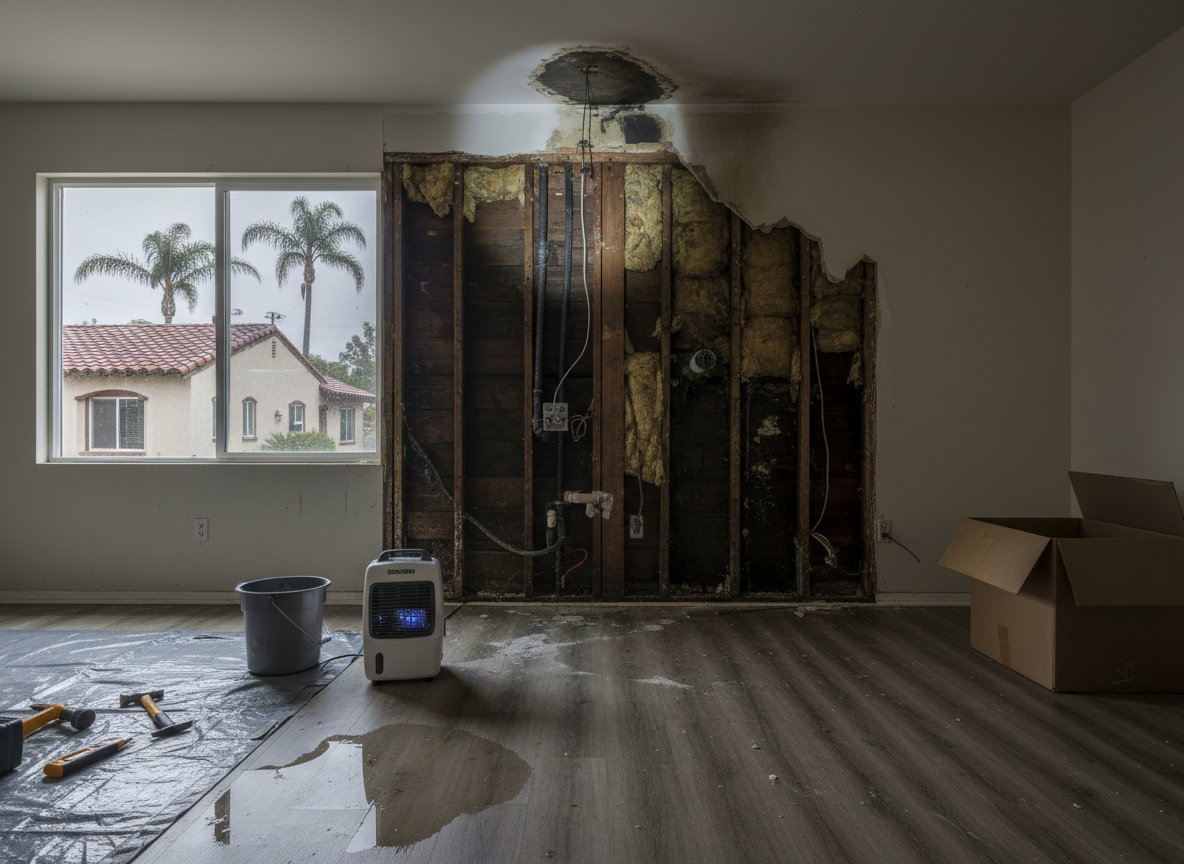
Hidden water damage after San Diego winter storms often first appears through musty odors or faint discoloration on ceilings and walls in homes throughout San Diego County, particularly in older stock found in North Park and Mission Valley where plaster and lath construction absorbs moisture slowly from coastal rains.
Examining Ceilings and Attics
Winter rains can penetrate roof valleys and flashing on homes near Balboa Park or the San Diego Zoo, leading to hidden saturation above living spaces. Check attic insulation for damp spots or darkened areas that feel cooler than surrounding materials, and look for water trails along rafters that may not reach drywall yet. In La Jolla properties built on slopes, gravity can direct runoff toward interior ceilings days after a storm passes. Use a flashlight to inspect for mold growth on wood sheathing, which thrives in the area's year-round mild humidity once moisture lingers. Pay attention to light fixtures where water may collect and drip later, staining surrounding surfaces. These signs often develop gradually in the region's Mediterranean climate, where heavy but infrequent downpours test older roofing without obvious exterior leaks.
Inspecting Walls and Flooring
Moisture from storms frequently migrates into wall cavities through window frames or exterior siding common in Pacific Beach and Downtown San Diego residences. Press gently on drywall near baseboards to feel for softness or bubbling paint that indicates trapped water behind the surface. In North Park bungalows with original hardwood floors, cupping or buckling boards signal subfloor saturation that remains invisible until the wood expands. Check under area rugs or in closets where airflow is limited and drying occurs slowly after coastal fog mixes with storm runoff. Musty smells concentrated along interior walls often point to hidden saturation in insulation rather than surface condensation alone. Document any changes in texture or color over several days, as initial signs may intensify once indoor heating circulates air through affected cavities.
Checking Foundations and Crawl Spaces
San Diego County homes in Mission Valley and La Mesa frequently have crawl spaces where storm water collects against foundations before evaporating. Shine a light along sill plates and joists for dark staining or white efflorescence that forms when minerals leach from wet concrete. In Coronado and Chula Vista areas with older slab construction, hairline cracks can widen after repeated winter saturation, allowing moisture to wick upward into adjacent flooring. Listen for changes in floor squeaks that develop when subfloor plywood absorbs water and then dries unevenly. Ventilation in these spaces can mask odors until humidity rises again, so inspect during dry periods following storms to catch residual dampness before it affects living areas above.
Next Steps After Spotting Signs
Once signs appear, an independent local contractor can evaluate the extent through moisture meters and thermal imaging suited to San Diego's housing types. Readers may explore water damage inspection services or review what emergency water damage repair usually costs in San Diego for context on typical processes. Storm damage cleanup details also cover related exterior factors that contribute to interior issues. Pricing depends on the job and is discussed with the contractor after you call. Early identification in neighborhoods like La Jolla Cove or near the USS Midway Museum reduces the chance of secondary effects spreading through connected structures common in the county.